Showing posts with label restorative justice. Show all posts
Showing posts with label restorative justice. Show all posts
Friday
Beyond our habit of burying our conflicts, or just pushing them around
"Deep Democracy & Restorative Justice" workshop planned for July 2012. Subscribe to newsletter to stay informed on this & other related community-building initiatives: SUBSCRIBE to free updates from Mediation Support Ltd: http://www.mediationsupport.info/subscribenewsletter.html

Tuesday
SafeGround Management -innovation in Victim-Offender Mediation
SafeGround provides a platform to support a facilitated mediation process between victim and offender, and was the winning project at the 2010 Social Innovation Camp (www.jailbrake.org). The judges who awarded the SafeGround team top prize were from the Youth Justice Board, the Prison Reform Trust, the Police Improvement Agency and the Foyer Housing Foundation.
NESTA, funding our work through "Restorative Technology Ltd", has also produced the 'Radical Efficiency' report in which they acknowledge the work of a friend in Brazil who is innovating, clarifying and offering Restorative Justice to great effect:
'A great example of a new entrant to an issue bringing passion, naive intelligence and insights from elsewhere is Dominic Barter, who founded restorative circles,"
(I have paraphrased p11 of the report here; see p42-43 for much more about RJ in Brazil)
Toothpaste007
SafeGround1 and SafeGround2
On April 2nd 2010, following a meeting between Aleksi Knuutila and Paul Crosland, Aleksi published to the SafeGround group that "Paul will pursue building up a Safe Ground that would work outside of the youth justice system, sharing the same technology behind it, and would appreciate any help with that. This will be called SafeGround2 for now."
Update: SafeGround2 (as it was called) will be launched by November 5th 2010 at the website www.peoplesjustice.org.uk
Piloting SafeGround1 in Devon is progressing, and the first report back to NESTA (primary funders for Restorative Technology Ltd's work) in due in the last week of November 2010.
Friday
My priorities as a restorative practitioner in relation to: victim comfort, a burglar's life and/or the safety of the public?

- Observer article: Criminals should say sorry
- Follow-on article: Restorative Justice is not just a fad
Whilst I paid much attention to 'victim satisfaction', I was unwilling to prioritise a victim's comfort above the risk of an offender taking a lethal overdose of drugs if he didn't come out of the restorative meeting with a believable plan for change.
Beyond the life of that offender, what was at stake was the safety of the public at large; the 'recidivist burglar' has much to teach us if we want to break the cycle of crime.
This was my position at HMP Bristol and in 2008 it became a resigning issue.
The conflict underlying my resignation is very alive for me; all the more pertinent as the Criminal Justice System considers ways to cut costs and deliver better results.
I suggest that we start by treating prisons not as 'Toxic Waste Centres' but as 'valuable recycling centres for safer society'.
I look for others interested in sharing their work on
generating restorative prisons.
Wednesday
Radical Efficiency = Saving Public Money eg Restorative Justice

- to get harms repaired
- to get this done with respect
- to learn from each other's suffering
- to leave people empowered to lead law-abiding lives.
What we surely all want from Restorative Justice in the wake of a crime is for action to be taken; actions that work for victims, offenders, communities and the criminal justice system. Actions that generate a healthier future for us all, having 'sucked the marrow' out of the conflicts and pains we've been through.
A justice system that respects all, restores dignity, heals social rifts and can easily win public confidence is 'The Holy Grail'.
In relation to this holy grail, I no know one better than Dominic Barter to talk to; the guy who is (to me) the most inspiring restorative practioner in the world, Dom's work has been summarised in the report entitled 'Radical Efficiency',p42-45, 2010,NESTA -London.
http://www.nesta.org.uk/news_events/events/assets/events/radical_efficiency_launch
(NB NESTA is the National Endowment for Science, Technology and the Arts ).
Please note that NESTA has funded the first stages of setting up the 'Safeground team' in which I work. Safeground -and Restorative Technology Ltd- has produced software (under wraps) for a facilitated web communication tool for restorative justice.
NESTA has also chosen Safeground as one of their 10 case studies of digital disruption:
http://www.nesta.org.uk/areas_of_work/public_services_lab/reboot_britain/assets/features/safe_ground
All 10 Case studies and some valuable introduction about Digital Disruption is at:
http://www.nesta.org.uk/library/documents/DD_CaseStudies.pdf
Further updates will follow in relation to:
- Safeground1 (facilitated by a number of youth offending teams)
- Safeground2 (restorative approaches for the wider general population).
Friday
Which side are you on?

My experience is that people (including myself) are deeply attached to 'sides' and to conflicts that run deep for years.
Again, when working as a restorative justice co-ordinator at HMP Bristol, the staff and the prisoners wanted to know:"Which side are you on?"
Some people I met found it hard to feel trust until they could get a clear sense of 'which side' you were on.
And trust-building is perhaps the most important aspect of any project's success; well worth a heavy investment of time.
Once there is enough understanding of where each other is coming from, it becomes much quicker to make and enact action plans that no one undermines.
In the name of effective co-operation, it helps to be able to recognise 'the path of undermining behaviours': Sarcasm & 'put-down' jokes, excuses, gossip, withdrawl from talking to one another, 'go-slow' working practices, strike, open confrontation and/or separation.
In relation to someone in your past (or present), which of these behaviours have you partaken in? Some of them? All of them?
- Great, it helps to recognise the pattern and the cost paid.
Myrna Lewis points out in an invaluable book called "Inside the No" (available from freelender.org), her "five steps to decisions that last".
I paraphrase these as:
- Listening
- Compassionate response to difference
- Recognise the roles you are playing, and increase the democratic holding of these roles
- To the dissenters to any suggestion ask: "What would it take for you to come along?"
- Recognise whether you are operating within or without the Deep Democracy Paradigm and make adjustments
Saying to offenders: I'm on your side and I'm also on the victims' I would suggest does not amount to an adequate answer.
Cultural Baggage
Not only does the mainstream that try to create heroes and villains.
Even when I've participated in counter-cultural movements I've seen a simplistic polarisation and joined in such 'peace movement' songs as:
"Which side are you on?, which side are you on?Was this song over-simplistic and generalising? Yes - and no and neither and both?
Are you on the side of genocide, which side are you on?"
What may be lost if taking the victims' side
In Restorative Justice practice it's often all too easy for the practitioner to come down on the side of the victim. (And some practitioners insist that it also hard within the criminal justice system to actually put the victim first, a view which sometimes leads to more imbalanced behaviour as a dangerous way of handling a perceived 'power imbalance').
To come down on the side of the victim would be a big mistake if building safer societies is more important to you than helping victims feel better.
I know that to say something other than 'the victim must be priority' is a tough thing to say; it was a resigning matter for me at HMP Bristol.
(If you are a prospective colleague etc, in order to build trust aand understanding of the principles for which I stand documentation about my resignation is available on request)
If coming down on the side of the victim is something to guard against in Restorative Justice practice, so to are the following:
- to come down on the side of the offender
- to come down on the side of the community
- to come down on the side of the criminal justice system
Ideally (and my main occupation appears to be 'idealist') we use pain and waste to generate resources in closed-loop systems. See the writings on permaculture for more of this.
Ideally, said Gandhi, we generate small scale models of the larger change we want to see. For me this means trust-building, honouring difference and ensuring that all belong and can live with dignity. It starts with whatever organizations we choose to be in, and it is not just about the stated vision and mission of the organisation:
"Often the organization's declared vision, structure and model are almost irrelevant compared to its ability to incorporate differences of opinion and diverse styles of communication. If a group succeeds at diversity, it is a successful community and will work. If it cannot do this, it fails at the deepest spiritual level of community, becomes unsustainable within itself and does little good for the world around it."(From Arnie Mindell's seminal book: "Sitting In The Fire" -Link1; Link2; Wikipedia on Worldwork; freelender copy of book; Amazon Link)
Come join me, sitting in the fire.
- Now there's an invitation you may find hard to resist.
My favourite explanation of why someone does what they do comes from Arnie Mindell (p43 City Shadows)
"As far as I know my goals seem to be:Are you, as a potential colleague (or client of mediation services) provisionally willing to let me know your goals, and whether they enable you to work with difficult situations?
1) to achieve what I interpret to be unequivocal positive response from the client
2) to get the same response from the environment
3) to enjoy myself to the utmost
& 4) to appreciate the nature of difficult situations.
Obviously I have to be wide awake about myself because not every client will automatically join me in these expectations."
Colleagues and clients who are willing to 'walk towards the conflict' (Dominic Barter's phrase) are those I value the most, and will often work with just for the love of it.
Thursday
Mediation Support Ltd and freelender.org -both are ways to work with difference, build understanding, trust and sustainability
 Our future will be determined significantly by how we handle our conflicts, how we share what we have and how we learn to build systems without waste. Blame culture creates massive waste and threatens our sustainability as a species on this planet.
 Other approaches to conflict and possessions generate sharing, safety and growth. Mediation Support Limited supports the development of www.freelender.org and other initiatives building trust and resilient communities.
Having spent many key years in higher education I have an imclination/specialism towards understanding and criticizing. 9 or 10 of my 13-14 years in university (studying or employed) were when I was aged 25-35
At 35 I moved into 5 years working for a national charity. Since then, aged 40 I've had some official employment in a range of locations from another charity office to a prison to door-knocking as a charity fundraiser. Simultaneously in these years since I turned 40 I've worked just as much within the context of building companies which innovate in the fields of conflict and sharing.
For background information, click the picture above to see a minute-long interview from "The Moral of the Story". On this ITV1 programme, Paul explained how ApologyPlus (-more than sorry) and Mediation Services (e.g.123 telephone mediation) can produce transformation for 'victim' and 'offender'.
As Director of Mediation Support Ltd, Paul has committed the company to putting 30% of accumulated profits to the following charities:
The Restorative Justice Consortium; (NB. I am a trustee of this UK Charity; taking a sabbatical from September 2010-2011)
The Centre for Nonviolent Communication;
The Restorative Justice Consortium; (NB. I am a trustee of this UK Charity; taking a sabbatical from September 2010-2011)
The Centre for Nonviolent Communication;
---------------------------------------------------------------------------
Paul set up Mediation Support Ltd in 2006 as a strategy to share and develop the work of others who work with conflict. From 2007, Mediation Support Ltd has prioritised the conflict and change involved in the transition to a socio-economic order that is less dependent on oil.
The Transition Movement is about actively reducing our use of non-renewable power in ways that increase the quality of our lives.
(Sustainable Local Communities).
---------------------------------------------------------------------------
Paul intends to convert Mediation Support Ltd to a Community Interest Company within the next year, and would like to hear from you if you want Mediation Support to grow.
---------------------------------------------------------------------------
Paul intends to convert Mediation Support Ltd to a Community Interest Company within the next year, and would like to hear from you if you want Mediation Support to grow.
---------------------------------------------------------------------------
The rest of this page provides background information about Paul, written as a strategy to speed up the key processes of building our (potential) working relationship. Please let me know how you want to work with me by emailing me; other working opportunities will be available on www.mediationsupport.info
Biography and Inspirations:
Since 2001 (including 5 years as Head of Restorative Justice at the national charity for mediation services, Mediation UK) Paul's work has included providing training, conferences and support to mediation services and restorative practitioners. His previous work was as a criminologist and a volunteer neighbour mediator. Paul has trained in workplace mediation and specialised as a co-ordinator of prison based restorative justice projects.
Since 2007 Paul has been in regular communication with the restorative practioner by whom he is most inspired - Dominic Barter. Dominic works both in Brazil and as an international restorative justice consultant.
Some Web-based information about Dominic's Work:
- The art of sharing power and responsibility to create community
- October 2008 Keynote speaker presentation at the International Institute for Restorative Practices 11th World Conference.
Dominic being interviewed in detail on the nature of empathy (2009) Video 2; Video 3.
Dominic's description of restorative processes is as follows:
" We're talking about community processes based on circle-practices in which those involved in a conflict and members of their respective communities meet as equals with an explicit intention to:
- Repair harm that has been caused
- Restore a sense of dignity, security and justice.
- And reintegrate all into peaceful co-existence.
And to do that through a process of guided dialogue which empowers, heals, and connects, so that action is facilitated, both at an individual and a collective level, for mutual benefit."
(Dominic Barter)
The Complexity of Conflict from Restorative Circles on Vimeo.
(More articles about Dominic's work:
- http://www.iirp.org/realjustice/library/brazil.html
- http://www.mediaglobal.org/article/2009-06-12/restorative-circles-open-dialogue-and-healing-between-brazilian-institutions-and-gangs
The main website about restorative circles in Dominic's main website is www.restorativecicles.org)
Paul writes, "Both Dominic and the NVC-UK Network have greatly advanced my learning about restorative processes involving substitutes. A substitute who has trained in being able to hear what's important to you and express their authentic needs can provide a process that deepens understanding. This creates opportunities to find ways to get the needs met that, whilst unmet, are causing you pain. Distance deepens conflict and meeting a substitute might be a step towards meeting the actual person(s) with whom there is a conflict. Seeing how restorative processes do not require the engagement of the other enlarges the potential of these processes greatly."
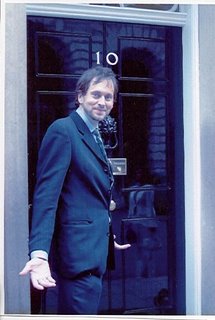 "I am an innovative, team-building, senior manager, privileged to be working in the context of community mediation and victim-offender mediation at local and national levels. My networking has enabled me to make presentations to government ministers, generate the resources to launch successful projects, engage in quality assurance, and publish books which have set new standards and shared practitioner experiences. This work is continuing through Mediation Support Ltd, which has pro-typed a new type of mediation service for the future:
123 Telephone Mediation.
Meanwhile, I am also developing further web-based services for ensuring that you have those important conversations in ways more likely to ensure everyone's needs are heard and addressed. For this I am seeking further funding."
"Paul is a provider of invaluable links" (Alex Turner, Health Service Mediation)
Following work with the Home Office and criminal justice agencies to produce and publish restorative practice training, assessment and Best Practice Guidance materials, Paul was invited by the Prime Minister to be personally thanked for his work on behalf of victims of crime.
Publications include
40 cases: Restorative Justice & Victim-Offender Mediation (Project founder & co-edited with Marian Liebmann), Mediation UK, 2003
Restorative Justice Reader, Professional Certificate in Effective Practice, (2003)Youth Justice (co-editor), YJB, 2003
The Police National Computer and the Offenders Index: can they be combined for research purposes? Home Office, 2002+ Guardian on Line interview: -Noise, Hedges and other boundary disputes (2007)
Paid employment and voluntary work
Freelending CIC (Company Number 6749438) (Founded November 2008)
Founding Director (alongside Edmund Johnson) & Project Manager working on:
freelender.org - community wealth sharing
Mediation Support Ltd (Company Number 5959249)
Founding director & C.E.O.
Also:
- Trustee of the Restorative Justice Consortium (elected to RJC Board in 2008, and taking a sabbatical from September 2010-2011)
- Co-ordinator of the (prototype) mediation service - 123 Telephone Mediation
Bristol Mediation -New Approaches to Conflict Resolution Ltd (Charity No 1000641)
Restorative Justice (RJ) Co-ordinator, H.M.P. Bristol
September 2007- June 2008 (18hrs/wk)
Mediation UK
Head of Restorative Justice
(formerly Restorative Justice Co-ordinator)
September 2001-June 2006
Ealing Mediation Service
Volunteer Mediator
March 2005- August 2007
University of Cambridge, Institute of Criminology
(Faculty of Law)
Research Associate
(formerly Research Assistant)
1997-2001
Cambridge Mediation Service Volunteer Mediator
(& Trustee in 2001)
1997-2001
University of Cambridge Postgraduate Student:
M.Phil, Criminology (Scholarship)
1995-1996
University of Lancaster
Course Organiser & Research Assistant
1995-1996
University of Lancaster
Undergraduate Student: B.A. Social Policy & Administration (First Class Honours)
1991-1995
A selection of the trainings I organised, co-ordinated with trainers & participated in:
Marshall Rosenberg, Getting to the Heart in Resolving Conflict, 21st May 2006
(Marshall Rosenberg 2009 video)

Community Mediation & Anti-Social Behaviour, 2004, Manchester
Victim-centred Restorative Justice, (2 days, Mediation UK, 2005), Birmingham
Victim-Offender Mediation Skills training (each a 3 day course) 2002, 2003 (Southend), 2004 (Aston)
2001 Mediation UK Victim-Offender mediation skills training, Blackpool (5 days)
Training (solely as participant):
Making the Business Case for Mediation, 2006, London
Developing a Fundraising Strategy & Writing Funding Applications, 2005-2006 3 days, Bristol Voluntary Sector support, VOSCUR)
Workplace Mediation (6 days, Conflict Management Plus), 2005-2006, Ealing
(This training was of a particularly high standard, delivered by a trainer and mediator of rare quality, Steve Hindmarsh)
2002-2009 Nonviolent Communication Foundation Course, & subsequent courses (approx 40 days training with NVC-UK Network Trainers / Marshall Rosenberg)
2001 Victim Support volunteer training course, Cambridge (approx. 4 days)
1999 Advanced Mediation training day (SEAMS), Suffolk
1997 Cambridge & District Community Mediation Service training for new mediators (approx. 5 days)
Recommended sites to save in your favourites:
Mediation Support.info
freelender.org
email Paul Crosland
Telephone Paul on Zero-78-Zero 70 66 202
Telephone Paul on Zero-78-Zero 70 66 202
Videos about building-trust in communities through freelending, freecycling, peer-to-peer renting etc:
Subscribe to:
Posts (Atom)